28 Women-Owned Finds From Nordstrom That Demand Your Immediate Attention
From Prada and Miu Miu to Tory Burch and Diotima.
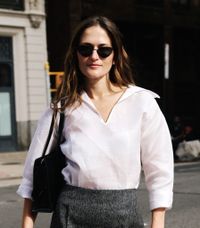

In case you haven't heard, either from us or one of the many exceptional women in your life, it's Women's History Month, the one month a year when women and only women get the spotlight firmly planted on them. To mark the occasion, I plan on spending the rest of March treating myself to a bit of shopping (shocker), and this year—for once in my life—I have set a few strict guidelines.
Really, there's just one self-imposed rule on this month's agenda: only shop brands that are owned by women. That way, I can help move the needle in the fashion industry, where, according to a 2016 Business of Fashion survey, only 14% of 50 major fashion brands are run by women, despite women making up the majority of fashion-school enrollments and entry-level fashion positions. That being said, there are still plenty of shockingly good options on the market that stem from the creative and business-savvy minds of women in fashion, with standout designers including Rachel Scott, Catherine Holstein, Tory Burch, Grace Wales Bonner, and, of course, the matriarch in all our hearts, Miuccia Prada.
To further keep my shopping day on track, I chose to focus on one retailer that I know is stocked full of pieces by women-owned brands. Without further ado, shop the 28 women-owned finds from Nordstrom on my Women's History Month consideration list. After looking them over one last time, I get the feeling they'll be on yours, too.
Shop Women-Owned Brands at Nordstrom

It's been over a decade since Elin Kling and her husband Karl Lindman founded their Swedish ready-to-wear label Toteme, and that maturity shows in the collections they produce season after season. Classic, timeless pieces that fashion people want to fill their wardrobes with—that is what Toteme does best.

In 2016, Santa Barbara-born sisters, Margaret and Katherine Kleveland, brought together a collective of LA-based women-identifying creatives and business leaders (all equity owners) to found Dôen, a brand that's always remained true to itself, ignoring trends, but always remaining relevant due to the high quality of its pieces and authentic nature of its designs.

Established by Mary-Kate and Ashley Olsen in 2006, The Row places emphasis on luxury in every way, from the fabrics its beloved pieces are made of to the way the brand markets itself.

Practically every Who What Wear editor owns a pair of Jenny Bird earrings, and it's not just us. Celebrities like Kylie and Kendall Jenner, Jennifer Lawrence, and Selena Gomez are often spotted in her pieces, too.

French influencer and fashion consultant Chloé Harrouche launched her brand Loulou de Saison, named after her social media handle @louloudesaison, in 2019 with the intent to create wardrobe essentials that she'd long struggled to find elsewhere. In the years since, her pieces have become staples in many a fashion person's closet, specifically her knits, outerwear, and trousers.

Another Kardashian-owned brand is Good American, the size-inclusive denim label founded by Khloé Kardashian and entrepreneur turned Shark Tank investor Emma Grede. A roaring success, the brand drops 10/10 denim silhouettes season after season, all of which are available in sizes 00 to 32 plus.

Founded by Catherine Holstein in 2016, Khaite has relatively quickly made a name for itself in New York City, with its elegant-with-a-twist garments and timeless boots regularly being worn by the city's best-dressed crowd and its runway shows being among New York Fashion Week's most anticipated.

At the moment, Tory Burch is one of the most talked-about and praised female designers in fashion, with her recent runway collections ringing in a new era for her brand, founded in 2004.

Filipino American designer Josie Natori founded her lifestyle brand, most known for its lingerie, in 1977 after leaving a cushy Wall Street job as Merrill Lynch's first-ever female vice president of investment banking. And just like her finance career, her brand is a roaring success.

I don't have to tell you the story behind Skims, Kim Kardashian's cult-favorite basics and shapewear brand. Though her bras and thongs are hard to resist, nothing from the line is as tempting as the classic tees, which are perfectly fitted and baby-soft.

Jamaican-born designer Rachel Scott launched her brand of meticulously crafted crochet garments in 2020 under the name Diotima after years of working for companies such as J. Mendel, Elizabeth and James, and Rachel Comey. In addition to building Diotima into one of New York's most beloved ready-to-wear brands, she is now also the creative director of another of the city's staple labels, Proenza Schouler.

New York–based lingerie brand Hanky Panky was founded in 1977 by Lida Orzeck and Gale Epstein and has since sold over 45 million pairs of its famous Original Rise Thong, which is lauded for feeling invisible.

Emily Adams Bode Aujla founded her namesake menswear (now womenswear and beyond) brand Bode in 2016 with the goal of swaying consumers to shop more intentionally.

Though originally founded in 1913 by Mario Prada, Prada is now synonymous with its co–creative director and owner, Miuccia Prada. Mrs. Prada took over the company in 1978 from her mother, Luisa Prada. She built it back up with husband Patrizio Bertelli, starting with its now-iconic use of nylon for its bags. Today, she designs alongside Raf Simons, putting out collections that influence the whole of fashion and culture.

Rachel Mansur and Floriana Gavriel started small and simple with their accessory brand Mansur Gavriel. Even so, it wasn't long before their totes and bucket bags took off in the fashion community and beyond.

People in fashion often say that you're either a Miu Miu girl or a Prada woman, but I prefer to be both, switching off based on my mood. The brand was founded by Miuccia Prada in 1993 as a counterpart to the main Prada line and "a workshop of new design expressions that play with the kaleidoscopic nature of fashion, where experimentation is the expressive playground for spontaneous creativity," according to a bio page on the Prada Group website.

Paloma Wool was founded in Barcelona by Paloma Lanna in 2014, and has gone on to become a quietly dominant brand among It girls like Kaia Gerber and Hailey Bieber. Both specifically frequent the label's trousers, which are both affordable and on-trend.

Grace Wales Bonner started her brand Wales Bonner in 2014 as a menswear brand, quickly becoming favored for her brilliant tailoring and ability to mix colors and prints in a casual-cool way. Fortunately for her female fans, the 2016 LVMH Prize for Young Fashion Designers recipient began designing for women as well as men in 2018. In the years since, she kicked off a lucrative partnership with Adidas, designing some of the brand's most popular sneakers of the 2020s—check StockX for proof—and was named the creative director of menswear at Hermès (casual).

Sarah Staudinger co-founded her L.A.-based brand alongside George Augusto in 2015 in an effort to design clothing for women that combined accessibility with style. In the nine years since, she's built up a cult-like following that stretches far past the Los Angeles city limits.

One of Instagram's favorite brands, Jasmin Larian Hekmat's Cult Gaia was founded in 2012 in Los Angeles and grew to fame with its Ark Bag, an almost architectural wooden purse that thousands sat patiently on the waiting list for. Today, her designs continue to awe fans of the brand, with everything from feathers to jewelry-like hardware contributing to its success.

Hanky Panky's thongs might be the brand's most famous item, but its bras are seriously slept on. Trust me. I own way too many of them. (Just kidding—I can always use another.)

Deirdre Quinn, Shun Yen Siu, and Ida Siu founded Lafayette 148, named after the NYC address where it got its start, in 1996 with the intention to make clothes for women, by women. Quality is key for the brand, with only the best materials—think cashmere, genuine leather, silk, and linen—being used to craft its timeless and elegant ready-to-wear and accessories.

Dublin-born, Central Saint Martins graduate Simone Rocha first debuted her namesake brand at London Fashion Week in 2010. In the more than two decades since, she's never wavered from her original and authentic aesthetic, using playful silhouettes and details to paint a new, modern picture of femininity.

More so than accessories, Khaite's Holstein is known for her exceptional denim offering, specifically the Danielle jeans, which are all over TikTok.

Everyone thinks of Mansur Gavriel as a bag brand, but don't sleep on the shoes. These ballet pumps are pure perfection.

Miami-based creatives Cristy Mantilla and Duda Teixeira never thought their jewelry brand Éliou would be the internet sensation it is today, but after their years of working together as stylists and designers, the brand was destined for success. From the beginning, their marine-inspired earrings and necklaces were prone to sellouts, but it wasn't until Harry Styles's stylist, Harry Lambert, started accessorizing the singer in its pieces that the brand really blew up.

Joyce Azria, the daughter of famed designer Max Azria, founded her brand Avec Les Filles—or "with the girls" in French—in 2017. According to an interview in the Los Angeles Times, she wanted to create clothing that felt "a little charming and special" but also wearable. Most importantly, the brand had to be affordable.

Time and time again, Miu Miu delivers viral designs that send the fashion world shopping (and posting).
This post was published at an earlier date and has since been updated.
